◄ Carnets Geol. 26 (19)
Outline
[1. Introduction]
[2. General setting]
[3. Material and methods]
[4. Systematic paleontology]
[5. Conclusions] and ...
[Bibliographic references]
Department of Geological Engineering, University of Mersin,
Çiftlikköy Campus, 33343, Mersin (Türkiye)
Published online in final form (pdf) on October 14, 2026
DOI 10.2110/carnets.2026.2619

[Editor: Bruno R.C. Granier;
language editor: Robert W. Scott]

The Lower Jurassic succession in the Beyaz Aladağ Unit (Eastern Taurides) includes Hettangian-Pliensbachian shallow-marine carbonates. The studied Sinemurian-Pliensbachian strata, characterized by abundant oncoids and megalodontid bivalve shells, contain a diversified benthic foraminiferal assemblage including orbitopsellids, hauraniids, biokovinids, cyclamminids, and siphovalvulinids taxa. This paper focuses on the morphological analysis of the key biostratigraphic marker species Lituosepta recoarensis Cati, 1959, Lituolipora termieri (Hottinger, 1967), Bosniella oenensis Gušić, 1977, and introduces a new Larger Benthic Foraminifera, Sievoides blumenthali sp. nov. Some poorly known morphological characteristics of these index species have been illustrated, and some potential discrepancies have been improved. The selected taxa have been documented here for the first time from the Beyaz Aladağ Unit, Eastern Taurides. The new species, probably restricted to the Pliensbachian Orbitopsella Zone, is characterized by a coarse agglutinated wall with an irregular, subepidermal polygonal network, a developed spiral stage followed by a long uniserial cylindrical stage, and a simple aperture. It differs from the type species Sievoides kocyigiti Farinacci & Ekmekçi (2004) by a developed spiral stage and stratigraphic position (Pliensbachian). This new species is distributed in the peri-Mediterranean platforms (Taurides, Apennines, Dinarides). The discovery of Sievoides blumenthali in the Lower Jurassic confirms the earlier appearance of the larger Foraminifera having a wall with a subepidermal network, which is known to be common in the Mid-Late Jurassic.
• Sinemurian;
• Pliensbachian;
• micropaleontology;
• index species;
• shallow-marine carbonates;
• Taurus Mountains
Solak C. (2026).- Some stratigraphically important Larger Benthic Foraminifera from the Lower Jurassic and Sievoides blumenthali sp. nov., Beyaz Aladag Unit, Eastern Taurides, S Türkiye.- Carnets Geol., Madrid, vol. 26, no. 19, p. 417-436. DOI: 10.2110/carnets.2026.2619
Quelques grands foraminifères benthiques stratigraphiquement importants du Jurassique inférieur et Sievoides blumenthali sp. nov., unité de Beyaz Aladağ, Taurides orientales, sud de la Turquie.- La succession du Jurassique inférieur de l'unité de Beyaz Aladağ (Taurides orientales) comprend des carbonates de plate-forme marine peu profonde d'âge Hettangien à Pliensbachien. Les niveaux étudiés, datés du Sinémurien au Pliensbachien et caractérisés par l'abondance d'oncoïdes et de coquilles de bivalves mégalodontidés, renferment une association diversifiée de foraminifères benthiques, comprenant notamment des orbitopsellidés, des hauraniidés, des biokovinidés, des cyclamminidés et des siphovalvulinidés. Cet article porte sur l'analyse morphologique de plusieurs espèces clés à valeur de marqueurs biostratigraphiques : Lituosepta recoarensis Cati, 1959, Lituolipora termieri (Hottinger, 1967) et Bosniella oenensis Gušić, 1977. Il présente également un nouveau grand foraminifère benthique, Sievoides blumenthali sp. nov. Certaines caractéristiques morphologiques peu connues de ces espèces stratigraphiques de référence sont illustrées, et plusieurs divergences potentielles sont clarifiées. Les taxons sélectionnés sont signalés ici pour la première fois dans l'unité de Beyaz Aladağ, dans les Taurides orientales. La nouvelle espèce, probablement limitée à la zone à Orbitopsella du Pliensbachien, se caractérise par une paroi agglutinée grossière présentant un réseau polygonal sous-épidermique irrégulier, un stade spiralé bien développé suivi d'un long stade unisérié cylindrique, avec une ouverture simple. Elle se distingue de l'espèce type, Sievoides kocyigiti Farinacci & Ekmekçi (2004), par son stade spiralé développé et par sa position stratigraphique, correspondant au Pliensbachien. Cette nouvelle espèce est présente sur les plates-formes péri-méditerranéennes, notamment dans les Taurides, les Apennins et les Dinarides.La découverte de Sievoides blumenthali dans le Jurassique inférieur confirme l'apparition précoce de grands foraminifères possédant une paroi à réseau sous-épidermique, une caractéristique connue pour être fréquente au Jurassique moyen et supérieur.
• Sinémurien ;
• Pliensbachien ;
• micropaléontologie ;
• espèces stratigraphiques de référence ;
• carbonates de milieu marin peu profond ;
• Monts Taurus
During the Early Jurassic, shallow-marine carbonates formed extensively in the Mediterranean Tethys (Dercourt et al.,
2000). The Aladağlar/Aladağ Mountains, situated in the Eastern Taurides, is one of the valuable areas where shallow-marine Early Jurassic carbonates are well represented by an expanded succession
(Fig. 1  )
(Solak et al., 2025). The Lower Jurassic succession of the Beyaz Aladağ Unit documenting the recovery of diversity from the Triassic/Jurassic boundary to the Pliensbachian is rich in Larger Benthic Foraminifera and relatively low in algae. Simple forms such as the genus Siphovalvulina Septfontaine, 1988, and textulariids mostly characterize the Hettangian strata of the studied Beyaz Aladağ succession. The lower Sinemurian is characterized by the genus Everticyclammina Redmond, 1964, and Duotaxis Kristan, 1957 species, besides relatively abundant simple forms. Hauraniid forms, the genus Lituolipora Gušić & Velić, 1978, and Lituosepta recoarensis Cati,
1959, mark the upper Sinemurian strata. The abundant and diverse complex forms with alveoles and internal pillars, such as the genus Orbitopsella Munier-Chalmas,
1902, and Bosniella Gušić,
1977, are typical in the Pliensbachian strata of the Beyaz Aladağ succession. Following the Pliensbachian stage, the platform emerged in the Toarcian and Tithonian interval until subsiding in the Berriasian (Solak et al.,
2025).
)
(Solak et al., 2025). The Lower Jurassic succession of the Beyaz Aladağ Unit documenting the recovery of diversity from the Triassic/Jurassic boundary to the Pliensbachian is rich in Larger Benthic Foraminifera and relatively low in algae. Simple forms such as the genus Siphovalvulina Septfontaine, 1988, and textulariids mostly characterize the Hettangian strata of the studied Beyaz Aladağ succession. The lower Sinemurian is characterized by the genus Everticyclammina Redmond, 1964, and Duotaxis Kristan, 1957 species, besides relatively abundant simple forms. Hauraniid forms, the genus Lituolipora Gušić & Velić, 1978, and Lituosepta recoarensis Cati,
1959, mark the upper Sinemurian strata. The abundant and diverse complex forms with alveoles and internal pillars, such as the genus Orbitopsella Munier-Chalmas,
1902, and Bosniella Gušić,
1977, are typical in the Pliensbachian strata of the Beyaz Aladağ succession. Following the Pliensbachian stage, the platform emerged in the Toarcian and Tithonian interval until subsiding in the Berriasian (Solak et al.,
2025).
The biostratigraphy of the Aladağlar Lower Jurassic succession will be discussed in a future paper in conjunction with C-isotope stratigraphy. This study focuses on the micropaleontologic investigation of the Larger Benthic Foraminiferal taxa of the Lower Jurassic shallow-marine succession. The Lower Jurassic Larger Benthic Foraminifera of the peri-Mediterranean carbonate platforms have been studied by a number of authors (e.g., Hottinger, 1967; Septfontaine, 1980, 1986, 1988; Bassoullet, 1997; Bassoullet et al., 1999; Fugagnoli, 2000; Boudagher-Fadel et al., 2001; Kabal & Taslı, 2003; Fugagnoli, 2004; Boudagher-Fadel & Bosence, 2007; Velić, 2007; Gale, 2014). This paper aims to report and discuss stratigraphically important Larger Benthic Foraminifera from the Beyaz Aladağ and to describe a new species from the Pliensbachian. The record of Sievoides blumenthali sp. nov. confirms the occurrence in the Lower Jurassic of a taxon with a developed alveolar network (or hypodermic network Septfontaine (1988), which is known to be common in mostly Mid to Late Jurassic taxa.
|
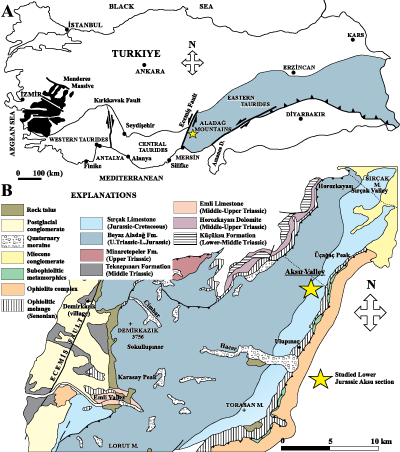
| Figure 1: Maps showing the Aladağ Mountains.
A, Geographical subdivision of the Taurides (Özgül,
1984). B, Simplified geologic map of the Aladağ Mountains (Tekeli et al.,
1984) showing the studied Aksu stratigraphic sections (yellow star). |
The Aladağlar/Aladağ Mountains are situated at the west end of the Eastern Taurides and bounded by the Ecemiş left-lateral strike-slip fault on the west (e.g., Metz,
1956)
(Fig. 1 ). They are composed of a series of different tectonic slices named as nappe structures (Blumenthal,
1952; Tekeli et al., 1984) or thrust sheets (Robertson et al.,
2022). The nappe structure of the Aladağlar was formed as a result of the ophiolite obduction, which began around the end of the Maastrichtian (Tekeli et al.,
1984). This movement affected the entire Eastern Taurides (Özgül,
1984; Tekeli et al., 1984) and was interpreted as the closure of the Internal Tauride Ocean (Şengör & Yılmaz,
1981).
The nappes or thrust sheets are referred to as Yahyalı, Siyah Aladağ, Minaretepeler, Çataloturan, Beyaz Aladağ, and Aladağ Ophiolite nappe (or Pozantı-Karsantı ophiolite, Robertson et al., 2022) from bottom to top (Tekeli et al., 1984). The Beyaz Aladağ Unit displays the largest and highest-peaked exposure. It begins with the Triassic dolomite and limestones containing the megalodon shells in the upper parts. The conformably overlying Lower Jurassic consists of dolomite and limestones containing abundant oncoids, megalodon shells, and relatively small gastropods. The Lower Jurassic (Hettangian to Pliensbachian) in the Aladağlar is represented by an expanded stratigraphic succession that is about 850 meters thick. The Cretaceous pelagic carbonates unconformably cover the Triassic and Lower Jurassic shallow marine platform carbonates with a thickness up to 2000 meters (Solak et al., 2025). The pelagic carbonates are small outcrops on the high peaks at different localities. Different Cretaceous condensed pelagic successions (e.g., Berriasian-Valanginian, Albian-Cenomanian, and Turonian-Coniacian) unconformably overlie the Triassic-Lower Jurassic platform carbonates. The pelagic carbonate succession displays a chaotic character containing debris-flow intercalations and gravity-slide limestone blocks, which constitute approximately half of the 50 m thick succession (Solak et al., 2025). A mélange unit consisting of radiolarite, volcanic rock, and neritic limestone blocks tectonically overlies the Cretaceous condensed succession (e.g., Tekeli et al., 1984; Solak et al., 2025).
Selected Larger Benthic Foraminifera were investigated from the Aksu section of the Aladağlar
(= Aladağ Mountains). The Aksu section (Coordinates: 37°50'20.93"N
35°21'12.23"E) is located south of the Aksu Valley, about 3.5 km northeast of Ulupınar village
(Fig. 1 ). Accessing the outcrops of the Aksu is difficult due to the cliff-like formations
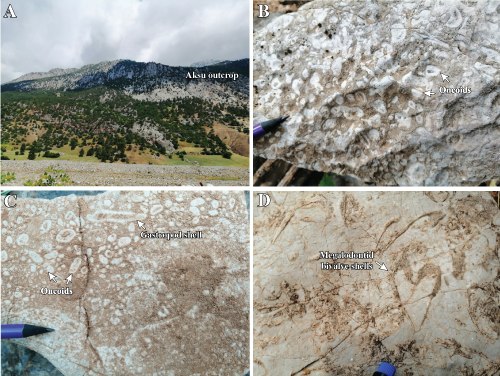
(Fig. 2A ). A 600 m-thick succession was sampled, starting from the lowest exposed limestones and a total of 200 samples were collected. Vertical faults commonly cut the succession
(Fig. 2A ); therefore, the total thickness of the outcrops seems excessive. The limestone samples are lithified carbonates, and thus benthic Foraminifera were studied in thin sections, as with many studies on similar lithology (e.g., De Castro,
1967; Fleury 1979; Arnaud-Vanneau,
1980; Schroeder & Neumann,
1985; Loeblich & Tappan,
1987; Hottinger, 2006; Taslı et al.,
2006; Velić, 2007; Chiocchini et al.,
2008; Consorti et al.,
2016; Schlagintweit & Cvetko Tešović,
2017; Solak & Taslı,
2020; Solak,
2021, 2022; Solak et al.,
2021; Koç & Sağaltıcı,
2024).
The Aksu section is composed of beige-cream-coloured massive limestones and characterized by abundant oncoids
(Fig. 2B ), gastropods
(Fig. 2C ), and megalodontid bivalve shells
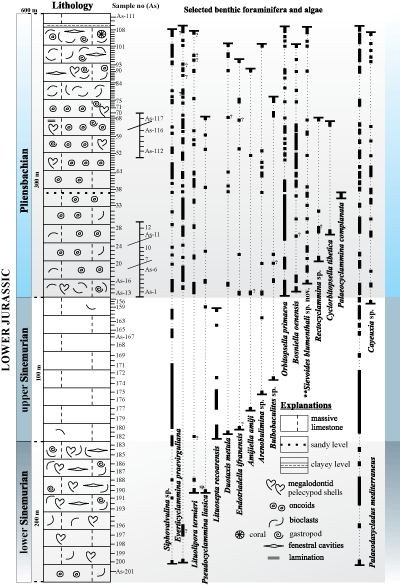
(Fig. 2D ). It has a diverse and abundant Larger Benthic Foraminiferal assemblage
(Fig. 3 ). The first 200 m of the section, assigned to the
Sinemurian, contains locally abundant gastropod and megalodontid shells. It includes mainly algae: Palaeodasycladus mediterraneus (Pia,
1920), Palaeodasycladus gracilis Cros & Lemoine,
1967, and benthic Foraminifera; Everticyclammina praevirguliana Fugagnoli,
2000, Duotaxis metula Kristan,
1957, and Siphovalvulina
spp. The following 100 m of the section is marked by Lituosepta recoarensis Cati,
1959, which characterizes the upper Sinemurian (e.g., Bassoullet,
1997; Azerêdo et al.,
2003; Velić, 2007). The upper Sinemurian limestones in the Aksu section do not contain any macrofossils. The remaining 300 m-thick part of the section is rich in oncoids, and microfossils. This part is mostly composed of oncoidal grainstone and less packstone microfacies and is characterized by the abundant occurrence of the genus of Orbitopsella Munier-Chalmas,
1902 and Bosniella oenensis Gušić,
1977, which are typical for the Pliensbachian stage (e.g., Hottinger,
1967; Bassoullet, 1997; Fugagnoli,
1998; Fugagnoli & Loriga Broglio,
1998; Perelis Grossowicz et al.,
2000; BouDagher-Fadel & Bosence,
2007; Velić, 2007). The stratigraphic distribution of the selected Larger Benthic Foraminifera is given in
Figure 3 .
All studied thin-sections for this work (labelled as As-1 to As-200) are stored at the thin section archive of the General Geology Laboratory, Department of Geological Engineering, Mersin University, Türkiye.
|
| Figure 2: Field photos of the Sinemurian-Pliensbachian shallow-marine limestones in the Aksu area.
A, General view of the Aksu outcrop. B-C, Oncoidal limestones, Pliensbachian.
D, Limestones with megalodontid shells, Sinemurian. |
|
| Figure 3: Stratigraphic distribution of selected benthic Foraminifera, the new species Sievoides blumenthali, and algae in the Aksu section. |
The Kaminski 2010 systematic classification has been followed (Kaminski, 2014).
Class Foraminifera Orbigny, 1826
Subclass Globothalamana Pawlowski et al., 2013
Order Loftusiida Kaminski & Michalevich, 2004
Superfamily Haplophragmioidea Eimer & Fickert, 1899
Family Cribratinidae Loeblich & Tappan, 1964
Genus Sievoides Farinacci & Ekmekçi, 2004
Type species: Sievoides kocyigiti Farinacci & Ekmekçi, 2004
Sievoides blumenthali sp. nov.
1977 Lituolidae?; Chiocchini, Pl. 5, fig. 2.
? 1977 Haurania sp.; Gušić, Pl. 11, fig. 1, left.
2015 Pseudocyclammina liassica Hottinger; Soycan et al., Fig. 9 (9-10).
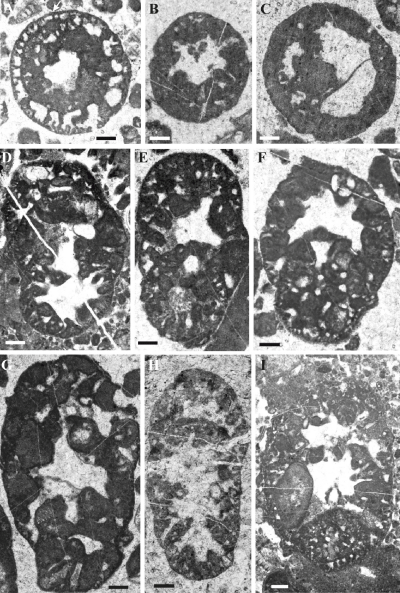
Holotype: Longitudinal section in Figure
4A , thin section As-39.
Paratype: Specimens figured in Figures
4B-I ,
5 .
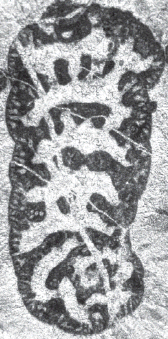
Diagnosis: Test large, consisting of a moderately developed initial planispiral stage with a large proloculus, followed by a long uniserial cylindrical stage having a circular transverse section. Wall and septa coarsely agglutinated. Imperforate microgranular, thin epidermis; exoskeleton formed by numerous beams (vertical partitions) and rafters (horizontal partitions) (Hottinger, 1978) produces an irregular subepidermal or hypodermic network (Septfontaine, 1988) polygonal network. Central zone of chambers not subdivided (no pillars or partitions). Aperture simple, centrally terminal.
Derivation of name: Dedicated to Mor M. Blumenthal for his first preliminary, comprehensive studies and impressive contributions to the knowledge of the Aladağlar Mesozoic shallow-marine carbonates.
Material: Total of 77 specimens in 62 thin sections from 21 samples.
Locality and horizon: The Aksu section (Coordinates: 37°50'20.93"N 35°21'12.23"E), south of the Aksu Valley, about 3.5 km northeast of Ulupınar village, Beyaz Aladağ Unit. Beige-cream coloured, massive limestones with abundant oncoids and fewer gastropods and megalodontid shells.
Stratigraphic range/occurrence: Sievoides blumenthali sp. nov. is described from the Beyaz Aladağ Lower Jurassic shallow marine limestones. It has been found throughout the Orbitopsella zone assigned to the Pliensbachian.
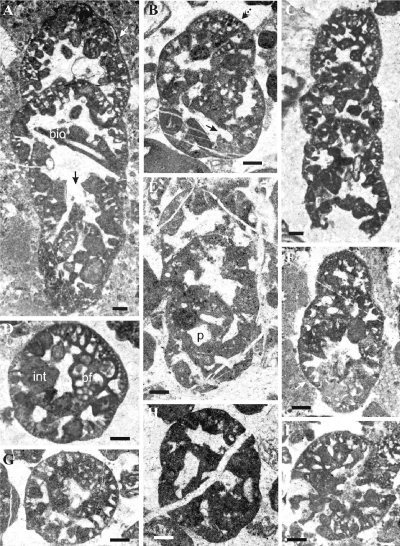
Description: Evidence of dimorphism is absent in the test. The test consists of a spiral initial part and an uniserially arranged cylindrical adult part. The spiral-coiled part has a large proloculus and the following four spiral chambers are arranged planispirally, consisting of one whorl. Diameter of the spiral-coiled part is a minimum of 1.2 mm and a maximum 1.8 mm, and approximately equal to that of the first uniserial chambers. A prominent proloculus is in the equatorial section of a specimen
(Fig. 4E ). The coarse agglutinated grains deformed the spherical or subspherical shape of the proloculus. The measured inner diameter of the proloculus is approximately 0.26 mm. Aperture of the coiled part is single and near the base of the septum
(Fig. 4B ).
The spiral-coiled part is followed by an adult part consisting of uniserially arranged cylindrical chambers with a circular transverse section. The uniserial part of the test, which is made up of four or five chambers, is straight. However, there can be a direction difference between the first chamber of the uniserial part and the last chamber of the spiral part (e.g.,
Fig. 4B ). Septa are curved in the direction of growth, with a single, sub-triangular cross-sections central aperture. Almost all specimens occur in random sections, often oblique; therefore, it is difficult to determine the overall height of the test. The measured maximum height of the uncoiled uniserial part in random sections is 5.22 mm. The width/diameter of the uncoiled chambers is mostly about twice the height. Their diameter in transversal sections varies from 1.22 mm to 1.72 mm. The uncoiled chamber diameters increase slightly in the growth direction of the test. However, it is often difficult to follow this from the random sections due to the curvature in the uniserial part.
Wall and septal texture is coarsely agglutinated containing small benthic Foraminifera and larger other grains (e.g., intraclast, bioclasts, cortoids, and pellets/peloids) (e.g.,
Figs. 4A, D, I ,
5D, I ). Exoskeleton consists of a very coarse, irregular subepidermal network (or hypodermic network) produced by a series of beams and rafters. This network exhibits an irregular polygonal pattern in the tangential sections
(Fig. 4C ). The subepidermal polygonal network appears quite irregular due to larger agglutinated grains
(Figs. 4
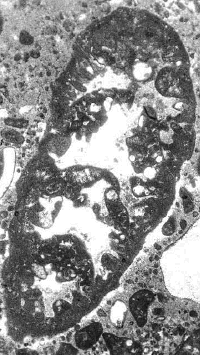
- 5 ). Therefore, it is difficult to identify the number of alcove rows/orders in each chamber. In transverse sections, longer primary beams (main partitions) and two to three? short secondary beams (secondary partitions or intercalary beams) are easily distinguished
(Fig. 5A ). Microgranular thin epidermis is clearly recognizable in well-preserved specimens (e.g.,
Figs. 4A, F ,
5A ). Wall thickness is equal to almost half the total chamber height.
No pillars or partitions subdivide the central zone of the chambers.
|
| Figure 4: Thin-section microphotographs of Sievoides blumenthali sp. nov. from the Pliensbachian of the Beyaz Aladağ Unit (Aksu section).
A, sample As-39, holotype. B, sample As-27. C, sample As-60.
D, sample As-60. E, sample As-27. F, sample As-39. G, sample As-37.
H, sample As-37. I, sample As-67. Abbreviations: p; proloculus, bf; benthic Foraminifera, int; intraclast, bio; bioclast. The black arrow shows a single aperture in the spiral part and the uncoiled part. White arrows show thin epidermis. The black dashed arrow shows a slightly curved first uniserial chamber following the spiral part. Scale bars: 0.25 mm. |
|
| Figure 5: Thin-section microphotographs of Sievoides blumenthali sp. nov. from the Pliensbachian of the Beyaz Aladağ Unit (Aksu section).
A, sample As-60. B, sample As-33. C, sample As-51. D, sample As-67.
E, sample As-30. F, sample As-60. G, sample As-51. H, sample As-33.
I, sample As-67. White arrows show thin epidermis. Scale bars: 0.25 mm. |
Dimensions: Given in Description Section.
Remarks: An exoskeleton with a well-developed subepidermal network, consisting of numerous beams and rafters, is mostly well known from Mid and Late Jurassic genera (e.g., Spiraloconulus Alleman & Schroeder, 1980; Bostia Bassoullet, 1998; Kastamonina Sirel, 1993; Sievoides Farinacci & Ekmekçi, 2004). Additionally, a few species with a subepidermal network were reported from the Lower Jurassic. Ijdranella atlasica Bassoullet et al., 1999, which was described from the Lower Jurassic (Pliensbachian) beds with Orbitopsella praecursor (Gümbel, 1872) of Morocco. This species has a well-developed subepidermal polygonal network and multiple apertures. Cymbriaella lorigae Fugagnoli, 1999, was described from the Domerian (upper Pliensbachian) of the upper part of the Rotzo Member (Lithiotis facies), Northeastern Italy. Its exoskeleton is characterized by a coarse, irregular subepidermal polygonal network; it has multiple apertures and a bilaterally compressed test. The mentioned two species have a more regular and fine subepidermal networks, unlike the very coarse and irregular, clearly more primitive network of the new species Sievoides blumenthali sp. nov. In addition, the first occurrence of Cymbriaella lorigae is in the Domerian. The new species Sievoides blumenthali sp. nov. is observed in the first Pliensbachian beds with Orbitopsella primaeva zone overlying the Lituosepta recoarensis zone (upper Sinemurian). The type species Sievoides kocyigiti is Kimmeridgian (Late Jurassic) in age. Therefore, this new taxon is considered to represents the earliest stage of development in the evolution of the Jurassic complex-walled benthic Foraminifera.
Comparisons: Table 1 provides a summary comparison between some Jurassic genera that have a subepidermal network and the genus Sievoides. Rectocyclammina Hottinger, 1967, was known from the Upper Jurassic (Kimmeridgian) and has an agglutinated wall with an imperforate outer layer, subepidermal "choffatelloid" network and a single terminal aperture. The early stage of Rectocyclammina is planispiral in the microspheric forms, but megalospheric forms can be completely uniserial (Loeblich & Tappan, 1987). This genus differs by its subepidermal "choffatelloid" network from the new species. Spiraloconulus Alleman & Schroeder, 1980, described from the Middle Jurassic, is characterized by a coarsely agglutinated, irregular subepidermal network and cribrate aperture on the terminal face. The description also includes the existence of pillar-like growths from the septa interspersed between the apertural pores (Loeblich & Tappan, 1987). BouDagher-Fadel (2008) also mentioned the existence of thick, heavy pillars in Spiroloconulus. However, Schlagintweit (2011) stated that grains integrated into the inside of the chamber and come into contact with the chamber floor might have been misinterpreted as pillars. Schlagintweit et al. (2018) reported Bispiraloconulus from the Berriasian showing identical structural features as Spiraloconulus except for the arborescent shell. They explained that grains in the central zone are interconnected to each other and to the following septum by short columnar and micritic elements at the roof of the chamber. Limognella Pelissié & Peybernès, 1982, is described from the Middle-Upper Jurassic of France. Loeblich and Tappan (1987) considered it a junior synonym of Spiraloconulus Alleman & Schroeder, 1980. Bostia Bassoullet, 1998, described from the upper Bathonian (Middle Jurassic) of France, has a large complex embryo, agglutinated wall, subepidermal network, and multiple openings. The Spiraloconulus genus is distinguished from the new species mainly by its pillar-like structures, and cribrate aperture, and the genus Bostia by its large complex embryo and multiple apertures. The Middle Jurassic genus Robustoconus Schlagintweit et al., 2013, differs in having a complex central zone consisting of anastomizing micritic septal excrescences (with constrictions and swellings) that extend deep into the chamber lumen (not interseptal pillars) and a short planispiral stage. The Upper Jurassic (Kimmeridgian-Portlandian) genus Kastamonina Sirel, 1993, consisting of uniserial chambers, differs from the new species by its irregularly distributed cribrate aperture and the lack of a spiral initial part.
The hitherto monospecific genus, Sievoides (Type species: Sievoides kocyigiti), was described by Farinacci and Ekmekçi (2004) from the Kimmeridgian (Upper Jurassic) of the northern boundary of the Taurus Mountains (Central Taurides). Sievoides kocyigiti is characterized by an agglutinated wall with coarse material and uniserial 4-6 chambers, a subepidermal network, and a simple terminal aperture, produced centrally inside the arcuate septal thickness, as an internal neck extending outward. In the description of the Sievoides kocyigiti, the presence of a spiral part was not mentioned. The developed spiral part and stratigraphic position (Pliensbachian) allow the new species to be easily distinguished from the type species.
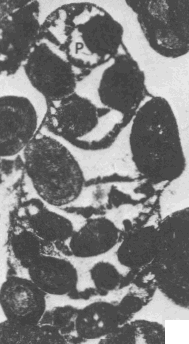
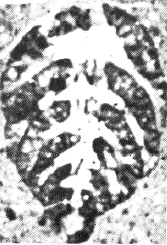
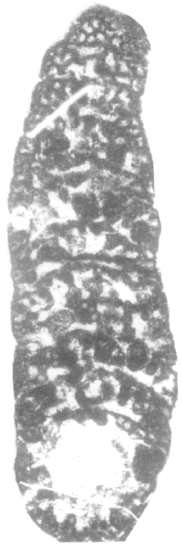
Table 1: A summarized comparison of some Jurassic genera with the genus Sievoides.
|
Genus |
Spiraloconulus Alleman
& Schroeder, 1980 (Loeblich & Tappan,
1987) |
Kastamonina Sirel,
1993 |
Bostia Bassoullet,
1998 |
Cymbriaella Fugagnoli,
1999 (figure after Schlagintweit & Velić,
2011) |
Sievoides Farinacci
& Ekmekçi, 2004 |
|
Illustrations |
|
|
|
|
|
|
Shape of test* |
large, a short initial trocho- or plani-spiral, conical to cylindrical, enrolled to rectilinear, early enrolled stage producing a flattened test apex |
uniserial, elongated to high conical in microspheric, high conical with a tapered base in megalospheric forms |
large, a short planispiral stage followed by a cylindrical or compressed uniserial stage, complex embryo |
large, initially coiled in a low trochospire or planispirally, later uniserial and rectilinear chambers, bilaterally compressed |
large, elongate, uniserial, rectilinear to slightly arcuate, circular |
|
Central zone** |
pillar-like growths from the septa interspersed between the apertural pores |
no pillars |
no pillars |
no pillars |
no pillars |
|
Wall composition |
coarsely agglutinated, irregular subepidermal network (beam, rafter) |
agglutinated, subepidermal alveolar network (or hypodermic network, Septfontaine, 1988) (beam, rafter) |
agglutinated, subepidermal network delimiting irregular cortical alveoles |
coarsely agglutinated, a coarse irregular subepidermal polygonal network (consisting of beams and shallow rafters) |
agglutinated with coarse material, externally smooth; subepidermal alveolar network |
|
Aperture** |
cribrate on the terminal face |
irregularly distributed cribrate aperture |
multiple openings |
multiple apertures in the terminal face |
simple, centrally terminal, on an internal neck extending outward |
|
Stratigraphic* distribution |
Middle Jurassic |
Kimmeridgian-Tithonian (Upper Jurassic) |
upper Bathonian (Middle Jurassic) |
Pliensbachian (Domerian) (Lower Jurassic); upper Aalenian-lower Bajocian (Middle Jurassic) |
Kimmeridgian (Upper Jurassic) |
|
Geographic distribution |
France, Italy, Arabia, Oman, Karst Dinarides of Croatia |
North of Türkiye, Akkaya Limestone |
NE of Aquitaine basin, Dordogne, France |
Trento Platform, Venetian Prealps, Northeastern Italy, Karst Dinarides of Croatia (Schlagintweit & Velić, 2011) |
Balçıkhisar, northern boundary of the Taurus Mountains, Türkiye |
** reliable diagnostic criteria; * relatively reliable diagnostic criteria
Stratigraphic and geographic range: A well-preserved longitudinal section identified as Lituolidae? from the upper Lias (Lower Jurassic) of the Abruzzo Apennines (Chiocchini, 1977) is a identical with the new species, Sievoides blumenthali. A transversal section assigned to Haurania sp., from the Sinemurian-Pliensbachian of the Dinarides (Gušić, 1977), is similar to the Sievoides blumenthali. Two specimens identified as Pseudocyclammina liassica from the Pliensbachian of the Lycian Nappes, Western Taurides, belong to the new species (Soycan et al., 2015). These show that the new species was common in the Tethys Early Jurassic platforms. Its stratigraphic range is probably restricted to the Pliensbachian, zone with Orbitopsella.
Superfamily Loftusioidea Brady, 1884
Subfamily Orbitopsellinae Hottinger & Caus, 1982
Genus Lituosepta Cati, 1959
Type species: Lituosepta recoarensis Cati, 1959
Lituosepta recoarensis Cati, 1959
(Fig. 6 )
1959 Lituosepta recoarensis Cati; Cati, Pl. 1, figs. 1-5, 7, 11, 14.
1962 Lituosepta recoarensis Cati; Sartoni & Crescenti, Pl. 13, fig. 2; Pl. 47, fig. 7.
1967 Lituosepta recoarensis Cati; Hottinger, Figs. 15-16; Pl. 4, figs. 14-16; Pl. 8, figs. 27-29.
1977 Lituosepta recoarensis Cati; Chiocchini, Pl. 8, figs. 2-3.
1984 Lituosepta recoarensis Cati; Septfontaine, Pl. 1, figs. 6-11.
1994 Lituosepta recoarensis Cati; Chiocchini et al., Pl. 2, figs. 7, 15.
2003 Lituosepta recoarensis Cati; Kabal & Taslı, Pl. 2, figs. 1-7.
2004 Lituosepta recoarensis Cati; Fugagnoli, Pl. 1, fig. 8.
2007 Lituosepta recoarensis Cati; BouDagher-Fadel & Bosence, Pl. 1, fig. 3; Pl. 2, fig. 3.; Pl. 3, figs. 1, 4.
2007 Lituosepta recoarensis Cati; Velić, Pl. 2, figs. 5-8.
2015 Lituosepta recoarensis Cati; Fugagnoli & Bassi, Figs. 3.1-3.9, 4.1-4.7, 5.1-5.4.
2018 Lituosepta recoarensis Cati; BouDagher-Fadel, Pl. 4.16, figs. 8-9.
Taxonomic notes/remarks: Lituosepta recoarensis was described by Cati (1959) from the Lower Jurassic of the Calcari Grigi Group, Southern Alps, northern Italy. Later, Hottinger (1967) described Lituosepta compressa based on the illustrations of Cati's (1959) original specimens and his own specimens from Morocco. According to Hottinger (1967), Lituosepta compressa differs from Lituosepta recoarensis in having a smaller test, more pronounced flattening, the significantly more marked development of the pillars in the adult stages, and a smaller proloculus (0.06-0.08 mm) in megalospheric forms. Hottinger noted that the transversal sections of Lituosepta recoarensis in Cati's (1959) illustrations could also belong to the genus Haurania. Therefore, he believed that both species of Lituosepta were laterally flattened. Unlike Hottinger (1967), Septfontaine (1984) agreed that Lituosepta recoarensis of Cati (1959) has a circular transversal section and he subsequently created the new genus, Planisepta, with a flattened test (Septfontaine, 1988). Fugagnoli (1998) and Fugagnoli and Loriga Broglio (1998), however, disregarded the validity of the genus Planisepta and accepted Hottinger's (1967) interpretation. Loeblich & Tappan (1987) considered Lituosepta as a junior synonym of the genus Labyrinthina Weynschenk, 1951. Gale (2014) noted that the distinction between the two species was not sufficiently well defined and, partly agreeing with Septfontaine (1984), accepted Hottinger's (1967) Moroccan specimens as Lituosepta compressa. Gale, following a similar view to Fugagnoli (1998) and Fugagnoli and Loriga Broglio (1998), accepted Planisepta as a synonym for Lituosepta. Lastly, Fugagnoli and Bassi (2015) resampled the type stratigraphic section of Cati (1959) in order to better define the Lituosepta recoarensis. In that study, the original nomenclature Lituosepta compressa was retained, and the genus Planisepta was declared invalid. Lituosepta recoarensis specimens in the Beyaz Aladağ Unit were examined, taking into account the detailed morphological descriptions of Fugagnoli and Bassi (2015). Recently, Bucur (2025) did not consider test compression a generic feature when comparing the morphologically very close Cretaceous genera Scythiolina (flattened-compressed test) and Histerolina (uncompressed). Bucur (2025) presented an emended diagnosis for the genus Scythiolina.
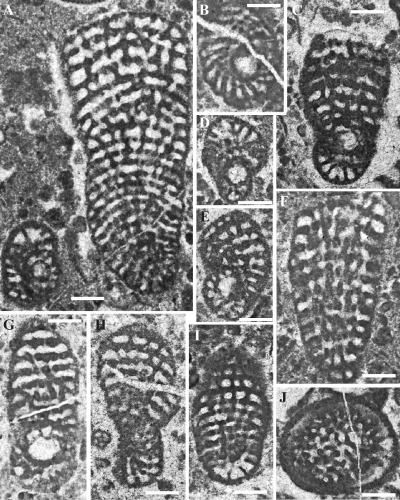
Morphological remarks: A total of twenty-five well-preserved specimens with random sections of Lituosepta recoarensis Cati,
1959, were examined. The population comprises three forms described by Fugagnoli and Bassi
(2015): two generations of megalospheric forms (A1 and A2) and a microspheric form (B). A1 megalospheric forms are dominant in the population. The planispiral part of the A1 forms is composed of a simple proloculus (inner diameter of 0.13 mm to 0.17 mm)
(Fig. 6B-C, E, G ) followed by
1.5 planispiral whorls consisting of more than 15 chambers (Fig.
6B, E ). The diameter of the planispiral part is 0.45-0.75 mm. The planispiral part of the test is followed by the uncoiled part of 5-12 chambers
(Fig. 6C, E, G-I ). The height of the A1 test is between 0.85 mm and 1.33 mm.
A2 megalospheric forms (Fig. 6A left, D ) are characterized by
1.5 planispiral whorls consisting of more than 20 chambers. The uncoiled part has not developed in this form. The proloculus of the A2 (inner diameter of 0.12 mm to 0.14 mm) is smaller than that of the A1 forms. The A forms have approximately similar morphometric parameters to those studied by Fugagnoli and Bassi
(2015) from the type material of Cati's stratigraphic section (Cati,
1959). However, unlike the typical material of Cati, no specimen with 2 planispiral whorls has been observed.
The microspheric B forms are represented by three specimens (Fig.
6A right, F, J ). Due to the random sections, the proloculus and planispiral part are not clear. The specimens display a well-developed uncoiled uniserial stage that is slightly laterally compressed
(Fig. 6J ). The diameter/width of the chambers expands consistently in a cone-like arrangement
(Fig. 6A right ). The uncoiled part is composed of a maximum of 21 uniserial chambers. The maximum height of the B test is 2.16 mm. The megalospheric specimens (B forms) examined in this study are larger in size than those in Cati's type material.
|
| Figure 6: Thin-section microphotographs of Lituosepta recoarensis Cati,
1959, from the upper Sinemurian of the Beyaz Aladağ Unit (Aksu section).
A, sample As-177. B, sample As-159. C, sample As-181.
D, sample As-177. E, sample As-181. F, sample As-177.
G, sample As-177. H, sample As-181. I, sample As-181.
J, sample As-178.
B-C, E, G-I: Megalospheric A1 forms. A left side, D: Megalospheric A2 forms. A right side, F and J: Microspheric B forms. Scale bars: 0.25 mm. |
Stratigraphic and geographic range: Bassoullet (1997) stated that Lituosepta recoarensis is a stratigraphically important species for the Sinemurian. Septfontaine (1984, 1988) identified its stratigraphic range as upper Sinemurian. The stratigraphic position of Lituosepta recoarensis below the Orbitopsella zone in the Taurides supports this opinion. It was recorded from the upper Sinemurian in the Beyaz Aladağ Unit (Eastern Taurides). Similarly, Kabal and Taslı (2003) reported it from the upper Sinemurian of the Central Taurides. The range of Lituosepta recoarensis in the Taurides, Türkiye, can be constrained to the upper Sinemurian. It was also recorded from the upper Sinemurian of the Algarve Basin, Portugal (Azeredo et al., 2003) and the Central High Atlas, Morocco (Ettaki et al., 2025).
However, its range was expanded from the Sinemurian to the Pliensbachian in some studies. It is reported from the upper Sinemurian-lower Pliensbachian of the Karst Dinarides (Velić, 2007), from the Pliensbachian of Israel (Perelis Grossowicz et al., 2000), from the Sinemurian-lower Pliensbachian of Spain, from the Sinemurian-Pliensbachian of Morocco and Greece (BouDagher-Fadel & Bosence, 2007), and from the Pliensbachian of the Northern Alps, Italy. It is recorded from the Pliensbachian of the Apennines (Chiocchini et al., 1994). In the Taurides, this species has not yet been found in association with the common Pliensbachian taxon, Orbitopsella.
Suborder Biokovinina Kaminski, 2004
Superfamily Biokovinoidea Gušić, 1977
Family Lituoliporidae Gušić & Velić, 1978
Genus Lituolipora Gušić & Velić, 1978
Type species: Mayncina termieri Hottinger, 1967
Lituolipora termieri (Hottinger, 1967) emend. Kabal & Taslı, 2003
(Fig. 7 )
1967 Mayncina termieri Hottinger; Hottinger, p. 31, Pl. 3, figs. 2-10.
? 1977 Mayncina termieri Hottinger; Chiocchini, Pl. 8, fig. 7.
1978 Lituolipora polymorpha Gŭsić & Velić; Gŭsić & Velić, Pls. 1-9.
1984 "Mayncina" termieri Hottinger; Septfontaine, Pl. 1, fig. 20; Pl. 2, figs. 1-2, 4.
1988 Paleomayncina n. gen. termieri (Hottinger); Septfontaine, p. 242.
1998 Paleomayncina termieri (Hottinger); Fugagnoli, Pl. 7, figs. 1-5.
1998 Paleomayncina termieri (Hottinger); Fugagnoli & Loriga Broglio, Fig. 8 (1-2).
1999 Paleomayncina termieri (Hottinger); Bassoullet et al., Pl. 4, figs. 1-3.
2003 Lituolipora termieri (Hottinger); Kabal & Taslı, Pl. 1, figs. 1-20.
2006 Lituolipora termieri (Hottinger); Cai et al., Pl. 4, figs. 13-21.
2007 Bosniella oenensis Gušić; BouDagher-Fadel & Bosence, Pl. 7, figs. 3-4.
2014 Lituolipora termieri (Hottinger); Gale, Pl. 1, figs. 10-12.
2015 Mayncina termieri Hottinger; Soycan et al., Fig. 9 (7-8).
2015 Lituosepta compressa Hottinger; Soycan et al., Fig. 9 (13-14).
2017 Lituolipora termieri (Hottinger); Gale & Kelemen, Fig. 4G.
2018 Bosniella oenensis Gušić; BouDagher-Fadel, Pl. 4.16, figs. 1-2.
2025 Paleomayncina termieri (Hottinger); Ettaki et al., Fig. 3B-E.
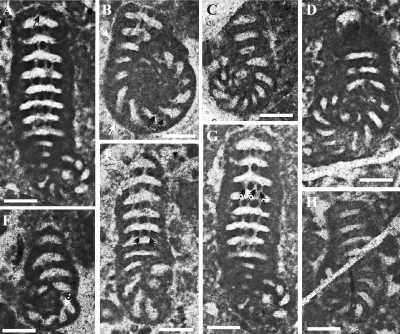
Remarks: Twenty well- and medium-preserved specimens of Lituolipora termieri (Hottinger,
1967) with random sections were examined. Almost all of the specimens consist of equatorial and subequatorial sections. No dimorphism was observed in the population. All specimens were identified as the megalospheric form. The wall is microgranular, including rare peloidal grains. The faint remnants of the keriothecal-like
(= canaliculate; e.g., Banner et al.,
1991) wall structure, which is mostly obscured, are rarely visible
(Fig. 7B ). The test in all specimens consists of the spiral and uncoiled parts. The spiral part is composed of a proloculus followed by
1.5-2 planispiral whorls consisting of 8 to 13 chambers in the last whorl. Spiral chambers are broad, low, and arched towards the direction of growth. The uncoiled part is well developed in specimens with
1.5 whorls, reaching a maximum of 10 (rarely 16) chambers (min. 4 chambers). In the uncoiled part, the height of the chamber is almost equal to the thickness of the septa. The septa are slightly inflated in the direction of growth
(Fig. 7A ). The uncoiled section exhibits approximately cylindrical growth
(Fig. 7A, F-H ). The maximum height of the test (including the spiral part) is 1.5 mm. In some unusual specimens, the uncoiled stage consisting of 16 chambers reaches a height of 2.4 mm.
Aperture is single, near to basal in the spiral part (Fig.
7E ), later becoming cribrate in the last whorl of the spiral part
(Fig. 7B ), and also in the uncoiled part (e.g.,
Fig. 7A, F-G ).
|
| Figure 7: Thin-section microphotographs of Lituolipora termieri (Hottinger,
1967) from the Sinemurian-Pliensbachian of the Beyaz Aladağ Unit (Aksu section).
A, sample As-190. B, sample As-61. C, sample As-21. D, sample As-190.
E, sample As-190. F, sample As-188. G, sample As-190.
H, sample As-190. White arrows show the faint remnants of the keriothecal-like wall structure. The black arrow indicates slightly inflated septa in the direction of growth. The white dashed arrow shows a single aperture in the spiral part. Black dashed arrows show the cribrate aperture in the uncoiled part. Scale bars: 0.25 mm. |
Stratigraphic and geographic range: This species was identified as Mayncina termieri in Morocco's Lower Jurassic by Hottinger (1967). It is recorded from Atlas, Morocco, in the Pliensbachian (Septfontaine, 1984; Bassoullet et al., 1999) and in the uppermost Sinemurian-lower Pliensbachian (Ettaki et al., 2025). Later, Septfontaine (1988) reported its stratigraphic range as upper Sinemurian-Pliensbachian. Velić (2007) recorded its stratigraphic distribution in the Adriatic platform (Karst dinarides) as the upper Sinemurian-Pliensbachian. Gale (2014) and Gale and Kelemen (2017) reported it from the lower Pliensbachian of the Dinarides (Slovenia). Its range in the Southern Alps (Northern Italy) was specified as the upper Sinemurian-Pliensbachian by Fugagnoli (1998) and by Fugagnoli and Loriga Broglio (1998). Its range was given as Pliensbachian-Toarcian in the central-southern Apennines (Chiocchini, 1977, 1987). Cai et al. (2006) reported it from the middle Lower Jurassic of Tibet, China.
Lituolipora termieri ranges from the upper Sinemurian to the Toarcian? in the Central Taurides (Kabal & Taslı, 2003). It was reported as "Mayncina termieri Hottinger" and as "Lituosepta compressa Hottinger" from the Pliensbachian of the Lycian Nappes, Western Taurides (Soycan et al., 2015). Lituolipora termieri is recorded from the upper Sinemurian-Pliensbachian in the Beyaz Aladağ Unit (Eastern Taurides).
Family Biokovinidae Gušić, 1977
Genus Bosniella Gušić, 1977
Type species: Bosniella oenensis Gušić, 1977
Bosniella oenensis Gušić, 1977
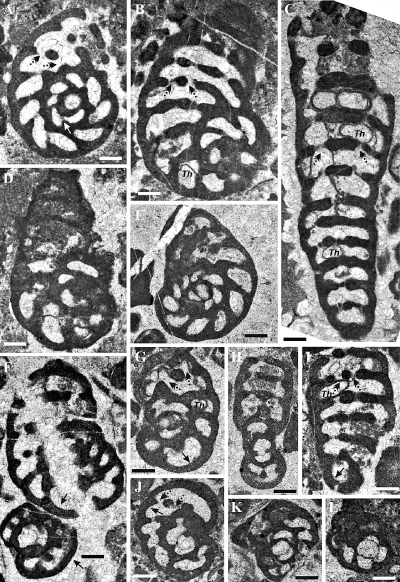
(Fig. 8 )
1977 Bosniella oenensis Gušić; Gušić, Pl. 11, figs. 1-2; Pl. 12, figs. 1-4, Pl. 13, figs. 1-3.
1998 Bosniella oenensis Gušić; Fugagnoli, Pl. 19, figs. 1-9; Pl. 20, figs. 1-2.
1998 Bosniella oenensis Gušić; Fugagnoli & Loriga Broglio, Fig. 10 (1-5).
non 2007 Bosniella oenensis Gušić; BouDagher-Fadel & Bosence, Pl. 5, figs. 4, 6; Pl. 7, figs. 3-4; Pl. 8, fig. 6. [Pl. 5, figs. 4, 6 = unidentified species; Pl. 7, figs. 3-4 = Lituolipora termieri (Hottinger, 1967)]
2014 Bosniella oenensis Gušić; Gale, Pl. 1, figs. 3-9.
2017 Bosniella oenensis Gušić; Gale & Kelemen, Fig. 4B.
non 2018 Bosniella oenensis Gušić; BouDagher-Fadel, Pl. 4.16, figs. 1-2. [= Lituolipora termieri (Hottinger, 1967)]
non 2021 Bosniella oenensis Gušić; Haig et al., Figs. 6J- K, 7J-K. (non ? Bosniella sp., Fig. 6L, N) (= unidentified species)
2026 Bosniella oenensis Gušić; Posenato et al., Fig. 6F. (= poorly preserved specimen for identification)
Remarks: The material consists of numerous well-preserved specimens that best represent the species Bosniella oenensis Gušić,
1977. More than thirty-five specimens in random sections were examined. Microgranular wall has a single thick keriothecal-like textured layer. The wall thickness is 0.096-0.116 mm in the equatorial sections; it is 0.110-0.123 mm in the uncoiled part. The thickness of the wall in the equatorial sections of the juvenile specimens (e.g.,
Fig. 8K-L ) is thinner, 0.070-0.080 mm. The keriothecal-like wall structure is mostly not well preserved, probably due to diagenetic recrystallization. Nevertheless, in some specimens it is clearly visible in some parts of the test (e.g.,
Fig. 8F-G, I-J ). The population includes megalospheric and microspheric generations.
Two specimens may have microspheric tests
(Fig. 8C, I ); megalospheric tests predominate
(Fig. 8A-B, D-H, J-L ).
Two specimens that have a well-developed uncoiled stage are considered microspheric
(Fig. 8C, I ). Although the proloculus and the early stages of the specimens are unknown, the large size of the tests (3.77 mm and 1.63 mm, the height of the uncoiled stage of the test, respectively) and the numerous uncoiled chambers suggest that they may have been microspheric. The presence of the uncoiled stage is not a distinguishing feature according to the original description of Gušić
(1977), "Some microspheric specimens are likely to have developed an uncoiled stage also, but this does not seem to be an entirely fixed characteristic. However, in some megalospheric tests tend to uncoil." A megalospheric specimen with an uncoiled stage is composed of four chambers
[Fugagnoli & Loriga Broglio, 1998, p. 65,
Fig. 10 (1)] and was found in this study (Fig. 8B, D-F ); it shows the presence of an uncoiled stage in megalospheric test. But the longitudinal section of a probable microspheric test in
Figure 8C , which has twelve uncoiled chambers, seems to be an exception and an unknown new feature. Based on this, it can be inferred that the uncoiled stage in megalospheric tests is less developed.
Megalospheric tests represent the vast majority of the specimens in this study. The embryonic stage of some megalospheric tests shows a distinct bilocular nucleoconch (e.g.,
Fig. 8E, J-K ). The two chambers are not always distinguishable due to poor preservation; in such specimens, the embryonic stage appears as a single oval chamber
(Fig. 8L ). The proloculus is 0.11-0.18 mm in inner diameter. The spiral part is planispiral (e.g.,
Fig. 8A-B, E ) and consists of 2 whorls. The last whorl is composed of 8 or 9 chambers. The spiral part is generally followed by an uncoiled part consisting of 2 or 4 chambers. Also some megalospheric tests are without an uncoiled part (e.g.,
Fig. 8G-H ). The heights of their spiral tests are 1.11 to 1.38 mm. The height of tests, including the uncoiled part, varies between 1.50 mm and 2.25 mm. The aperture is single, basal to central in the spiral part (e.g.,
Fig. 8A ); it is cribrate in the uncoiled part (e.g.,
Fig. 8B-C, I ) and also in the final stage of the last whorl of the spiral part (e.g.,
Fig. 8A, G, J ). The thaumatoporellaceans were erroneously considered an integral part of the test in the Lower Jurassic species (e.g., phrenoteca-like structures in Biokovina gradacensis and Bosniella oenensis) (e.g., Gušić,
1977; Loeblich & Tappan,
1987; Hottinger, 2006). Schlagintweit and Velić
(2012) explained that these structures are not elements/parts of the foraminiferan test but rather cryptoendolithic microorganisms, which they refer to as thaumatoporellacean algae, attached to the interior surfaces of the foraminiferan chamber walls. The thin-walled cryptoendolithic thaumatoporellaceans inside the chambers of Bosniella oenensis can be seen in
Figure 8C, G, I .
|
| Figure 8: Thin-section microphotographs of Bosniella oenensis Gušić,
1977, from the Pliensbachian of the Beyaz Aladağ Unit (Aksu section).
A, sample As-58. B, sample As-47. C, sample As-65. D, sample As-16.
E, sample As-51. F, sample As-36. G, sample As-36. H, sample As-16.
I, sample As-36. J, sample As-36. K, sample As-36. L, sample As-14. Black arrows show preserved keriothecal-like wall structure. The white arrow shows a single aperture in the spiral part. Black dashed arrows show cribrate aperture in the final stage of the last whorl of the spiral part and in the uncoiled part. Abbreviation: Th; cryptoendolithic thaumatoporellaceans. Scale bars: 0.25 mm. |
Stratigraphic and geographic range: Bosniella oenensis Gušić, 1977, was described from the Sinemurian-Pliensbachian of the Dinarides. According to Bassoullet (1997), it ranges from the upper Sinemurian to Pliensbachian in Bosnia (Dinarides). Velić (2007) gave the stratigraphic distribution in the Adriatic platform (Karst Dinarides) as the upper Sinemurian-Pliensbachian. Gale (2014) and Gale and Kelemen (2017) recorded it from the lower Pliensbachian of the Dinarides (Slovenia). Its range in the Southern Alps (Northern Italy) was designated as the Sinemurian-Pliensbachian by Fugagnoli (1998) and by Fugagnoli and Loriga Broglio (1998). A poorly preserved specimen assigned to Bosniella oenensis was reported from the upper Pliensbachian of the Southern Alps (Posenato et al., 2026). The stratigraphic distribution of Bosniella oenensis in the Beyaz Aladağ Unit (Eastern Taurides) is limited to the Pliensbachian. It has not been found below the Orbitopsella zone. It is noteworthy that this species may have a restricted paleogeographic distribution, as it has not been found in other areas of the Taurides.
In my opinion, the occurrence of Bosniella oenensis in Spain (Betic Cordillera), Morocco (High Atlas) (BouDagher-Fadel & Bosence, 2007; BouDagher-Fadel, 2018), and in Timor-Leste (Haig et al., 2021) is invalid due to misidentification.
The Sinemurian-Pliensbachian strata in the Beyaz Aladağ Unit (Eastern Taurides) are characterized by mostly oncoids and megalodontid shells, and are rich in Larger Benthic Foraminifera. The stratigraphically important Lituosepta recoarensis Cati, 1959, Lituolipora termieri (Hottinger, 1967), and Bosniella oenensis Gušić, 1977, which characterize these stages, are represented by numerous well-preserved specimens. Detailed morphological analysis of the Beyaz Aladağ assemblage has enabled the identification of a new species, the illustration of previously little-known morphological features of the aforementioned species, and the correction of some misidentifications.
A new, Larger Benthic Foraminifera Sievoides blumenthali sp. nov. from the Pliensbachian is characterized by a developed initial spiral stage with a large proloculus, followed by a long uniserial cylindrical stage, a coarse agglutinated wall with an irregular subepidermal polygonal network, and a simple aperture. The new species reveals the presence of a developed subepidermal network in a Lower Jurassic taxon, which is typical of most Middle-Upper Jurassic taxa. Therefore, it is considered that this taxon represents the earliest evolutionary stage in the evolution of Jurassic complex-walled benthic Foraminifera. In addition, Sievoides blumenthali sp. nov. has a widespread occurrence in the Tethys Early Jurassic platforms (Abruzzo Apennines, Dinarides, Taurides).
Lituosepta recoarensis has not yet been documented in the Taurides in association with Orbitopsella, a typical Pliensbachian taxon.
Bosniella oenensis Gušić, 1977, is reported here, for the first time, from the Pliensbachian of the Taurides. It is significant that Bosniella oenensis may have a limited paleogeographic distribution in the Taurides because it has not been found in other parts of the Taurides, and it has not been discovered below the Orbitopsella zone. In addition, identifying incorrect species determinations in the literature has revealed that the paleogeographical distribution of the species is limited to the Dinarides, the Alps, and the Taurides.
This study was supported by the Scientific and Technological Research Council of Turkey (TUBITAK) with Project Number 120Y241. The author thanks Prof. Dr Kemal Taslı (Mersin University) for helpful criticism and Samet Salar (Mersin University) for the preparation of thin sections. Thanks to two reviewers Lorenzo Consorti (Trieste, Italy) and Felix Schlagintweit (München, Germany) for providing helpful suggestions.
Allemann F. & Schroeder R. (1980).- Spiraloconulus nom. nov. for Spiroconulus Allemann & Schroeder 1972 (Foraminiferida).- Revista Española de Micropaleontología, Madrid, vol. 12, p. 358.
Arnaud-Vanneau A. (1980).- Micropaléontologie, paléoécologie et sédimentologie d'une plate-forme carbonatée de la marge passive de la Téthys : L'Urgonien du Vercors septentrional et de la Chartreuse (Alpes occidentales).- Thèse, Grenoble; Géologie Alpine, Grenoble, Mém. H.S., no. 11, 874 p. URL: https://tel.archives-ouvertes.fr/tel-00662977
Azerêdo A.C., Manuppella G. & Ramalho M.M. (2003).- The late Sinemurian carbonate platform and microfossils with Tethyan affinities of the Algarve Basin (south Portugal).- Facies, Erlangen, vol. 48, p. 49-60.
Banner F.T., Simmons M.D. & Whittaker J.E. (1991).- The Mesozoic Chrysalinidae (Foraminifera, Textulariacea) of the Middle East: The Redmond (Aramco) taxa and their relatives.- Bulletin of the British Museum (Natural History) Geology series, vol. 47, p. 101-152.
Bassoullet J.-P. (1997).- Les grands foraminifères. In: Cariou E. & Hantzpergue P. (coords.), Biostratigraphie du Jurassique ouest-européen et méditerranéen : Zonations paralléles et distribution des invertébrés et microfossiles.- Bulletin du Centre de Recherches elf Exploration Production, Mémoire, Pau, vol. 17, p. 293-304.
Bassoullet J.-P. (1998).- A new larger Foraminifera Bostia irregularis n. gen., n. sp. (Lituolacea, Hauraniidae) from the Middle Jurassic of Dordogne (France).- Revue de Micropaléontologie, vol. 41, no. 3, p. 181-195.
Bassoullet J.-P., Boutakiout M. & Echarfaoui H. (1999).- Two new genera: Palaeocyclammina n.gen. and Ijdranella n.gen., Foraminiferida (Textulariina) from a Orbitopsella praecursor (Gümbel) Liassic bed from Middle Atlas (Morocco).- Revue de Micropaléontologie, vol. 42, p. 213-230.
Blumenthal M.M. (1952).- Geographical, stratigraphical and tectonical features of the High Aladağ Mountains.- Publications of the Mineral Research and Exploration Institute (MTA) of Turkey D6, 136 p.
BouDagher-Fadel M.K. (2008/2018).- Evolution and geological significance of Larger Benthic Foraminifera.- Developments in Palaeontology and Stratigraphy, London, UCL Press, 704 p. DOI: 10.14324/111.9781911576938
BouDagher-Fadel M. & Bosence D.W.J. (2007).- Early Jurassic benthic foraminiferal diversification and biozones in shallow-marine carbonates of western Tethys.- Senckenbergiana Lethaea, vol. 87, p. 1-39.
BouDagher-Fadel M.K., Rose E.P.F., Bosence D.W.J. & Lord A.R. (2001).- Lower Jurassic Foraminifera and calcified microflora from Gibraltar, western Mediterranean.- Palaeontology, vol. 44, p. 601-621.
Brady H.B. (1884).- Report on the Foraminifera dredged by H.M.S. Challenger during the Years 1873-1876.- Report on the Scientific Results of the Voyage of H.M.S. Challenger during the years 1873-76, Zoology, vol. IX (part 22), xxi + 814 p. (115 Pls.). URL: http://www.biodiversitylibrary.org/page/49405122 (text); http://www.biodiversitylibrary.org/page/2007647 (plates).
Bucur I.I. (2025).- On the foraminiferal genera Scythiolina and Histerolina (Neagu, 2000).- Acta Palaeontologica Romaniae, Cluj-Napoca, vol. 21, no. 2, p. 35-39. URL: https://actapalrom.geo-paleontologica.org/APR_v_21_2/Bucur_Scythiolina_Histerolina.pdf
Cai H.-W., Li J.-G. & Zhang B.G. (2006).- Early and Middle Jurassic Foraminifera from Tingri and Nyalam regions of southern Tibet, China.- Acta Palaeontologica Sinica, Nanjing, vol. 45, p. 437-452.
Cati F. (1959).- Nuovo Lituolide nei Calcari Grigi liassici del Vicentino.- Giornale di Geologia, Bologna, vol. 27, p. 1-10.
Chiocchini M. (1977).- Ricerche geologiche sul Gran Sasso d'Italia (Abruzzo). I. Facies di margine della piattaforma carbonatica durante il Lias medio e superiore nei pressi di S. Stefano di Sessanio (F. 140 Teramo).- Studi Geologici Camerti, Camerino, vol. 3, p. 165-173 (9 Pls.).
Chiocchini M. (1987).- Il Giurassico in facies di margine della piattaforma carbonatica nell'Appennino centro-meridionale: Breve sintesi dei dati paleontologici e stratigrafici.- Bollettino della Società Paleontologica Italiana, Modena, vol. 26, no. 3, p. 303-308.
Chiocchini M., Chiocchini R.A., Didaskalou P. & Potetti M. (2008).- Microbiostratigrafia del Triassico superiore, Giurassico e Cretacico in facies di piattaforma carbonatica del Lazio centro-meridionale e abruzzo: Revisone finale. In: Chiocchini M. (ed.).- Memorie descrittive della Carta geologica d'Italia, Torino, vol. 84, p. 5-170.
Chiocchini M., Farinacci A., Mancinelli A., Molinari V. & Potetti M. (1994).- Biostratigrafia a foraminiferi, dasicladali e calpionelle delle successioni carbonatiche Mesozoiche dell'Appennino Centrale (Italia). In: Biostratigrafia dell'Italia centrale.- Studi Geologici Camerti, Camerino, p. 9-130.
Consorti L., Calonge A. & Caus E. (2016).- Pseudorhapydionininae of the Iberian Ranges (Cenomanian, Iberian Peninsula).- Spanish Journal of Paleontology, vol. 31, no. 2, p. 271-282.
Cros P. & Lemoine M. (1967).- Dasycladacées nouvelles ou peu connues du Lias inférieur des Dolomites et de quelques autres régions méditerranéennes (2e partie).- Revue de Micropaléontologie, vol. 9, no. 4, p. 246-257.
De Castro P. (1967).- Moncharmontia apenninica nuovo nome per Neoendothyra appenninica De Castro, 1966.- Bollettino della Società dei Naturalisti in Napoli, vol. 76, p. 475-476.
Dercourt J., Gaetani M., Vrielynck B., Barrier E., Biju-Duval B., Brunet M.F., Cadet J.-P., Crasquin S. & Sandulescu M. (2000).- Atlas Peri-Tethys. Palaeogeographic Maps. Late Cenomanian.- Commission de la Carte Géologique du Monde-Commission Geological Map of the World, Paris, 24 p.
Eimer G.H.T. & Fickert C. (1899).- Die Artbildung und Verwandtschaft bei den Foraminiferen. Entwurf einer natürlichen Eintheilung derselben.- Zeitschrift für Wissenschaftliche Zoologie, vol. 65, p. 599-708.
Ettaki M., Bouaouda M.S., Septfontaine M., Chellai E.H., Milhi A., El Bamiki R. & Vuks V.J. (2025).- Lower and lower Middle Jurassic foraminiferal assemblages and calcareous algae from the southern margin of the Central High Atlas, Morocco.- Carnets Geol., vol. 25, no. 1, p. 201-217. DOI: 10.2110/carnets.2025.2510
Farinacci A. & Ekmekçi E. (2004).- Sievoides kocyigiti n.gen., n.sp., Mesoendothyra altineriana n. sp. and Kurnubia feleensis n.sp. from Kimmeridgian shallow water limestones intercalated with alkaline igneous rocks, Western Taurus, Turkey.- Revue de Micropaléontologie, vol. 47, p. 57-69.
Fleury J.-J. (1979).- Le genre Murciella (Foraminifère, Rhapydionininae), dans le Crétacé supérieur de Grèce (zone de Gavrovo-Tripolitza).- Géobios, vol. 12, no. 2, p. 149-185.
Fugagnoli A. (1998).- Le associazioni a foraminiferi bentonici del Giurassico inferior della Piattaforma di Trento (Calcari Grigi-Liassico). Sistematica, biostratigrafia e paleoecologia (disertacija).- Dipartimento di Scienze Geologiche e Paleontologiche dell'Università degli Studi di Ferrara, 206 p.
Fugagnoli A. (1999).- Cymbriaella, a new foraminiferal genus (Textulariina) from the Early Jurassic of the Venetian Prealps (Northeastern Italy).- Revue de Micropaléontologie, vol. 42, no. 2, p. 99-110.
Fugagnoli A. (2000).- First record of Everticyclammina Redmond 1964 (E. praevirguliana n. sp.; Foraminifera) from the Early Jurassic of the Venetian Prealps (Calcari Grigi, Trento Platform, Northern Italy).- Journal of Foraminiferal Research, vol. 30, no. 2, p. 126-134.
Fugagnoli A. (2004).- Trophic regimes of benthic foraminiferal assemblages in Lower Jurassic shallow water carbonates from northeastern Italy (Calcari Grigi, Trento Platform, Venetian Prealps).- Palæogeography, Palæoclimatology, Palæoecology, vol. 205, p. 111-130.
Fugagnoli A. & Bassi D. (2015).- Taxonomic and biostratigraphic reassessment of Lituosepta recoarensis Catı, 1959 (Foraminifera, Lituolacea).- Journal of Foraminiferal Research, vol. 45, no. 4, p. 402-412
Fugagnoli A. & Loriga Broglio C. (1998).- Revised biostratigraphy of Lower Jurassic shallow water carbonates from the Venetian Prealps (Calcari Grigi, Trento Platform, Northern Italy).- Studi Trentini di Scienze Naturali - Acta Geologica, vol. 73, p. 35-73.
Gale L. (2014).- Lower Jurassic foraminiferal biostratigraphy of Podpeč Limestone (External Dinarides, Slovenia).- Geologija, Ljubljana, vol. 57, no. 2, p. 119-146. DOI: 10.5474/geologija.2014.011
Gale L. & Kelemen M. (2017).- Early Jurassic foraminiferal assemblages in platform carbonates of Mt. Krim, central Slovenia.- Geologija, Ljubljana, vol. 60, no. 1, p. 99-115. DOI: 10.5474/geologija.2017.008
Gümbel C.W. von (1872).- Über zwei jurassische Vorläufer des Foraminiferen-Geschlechtes Nummulina und Orbitulites (sic).- Neues Jahrbuch für Mineralogie, Geologie und Petrefaktenkunde, vol. 1872, p. 241-260.
Gušić I. (1977).- A new foraminiferal family, Biokovinidae, from the Jurassic of the Dinarids and its phylogenetic relationships.- Palaeontologia jugoslavica, Zagreb, vol. 18, p. 1-29.
Gušić I. & Velić I. (1978).- Lituolipora polymorpha n. gen., n. sp. (Foraminiferida, Lituolacea?) from the Middle Liassic of the Outer Dinarids in Croatia and the establishment of a new family, Lituoliporidae.- Geološki vjesnik, Zagreb, vol. 30, no. 1, p. 73-93. URL: https://geoloski-vjesnik.hgi-cgs.hr/wp-content/uploads/2022/07/1978_Gusic-Velic_573.pdf
Haig D.W., Rigaud S., McCartain E., Nano J., Barros I. S. & Martini R. (2021).- Biostratigraphic indices for Lower Jurassic carbonate-platform deposits (Perdido Group), Overthrust Terrane Association, Timor-Leste.- Journal of Asian Earth Sciences, vol. 215, article 104797, 14 p.
Hottinger L. (1967).- Foraminifères imperforés du Mésozoïque marocain.- Notes et Mémoires du Service Géologique, Rabat, no. 209, p. 1-129.
Hottinger L. (1978).- Comparative anatomy of elementary shell structures in selected larger Foraminifera. In: Hedley R.H. & Adams C.G. (eds.), Foraminifera. Volume 3.- Academic Press, p. 203-266.
Hottinger L. (2006).- Illustrated glossary of terms used in foraminiferal research.- Carnets Geol., vol. 6, no. M02 (CG2006_M02), 125 p. DOI: 10.4267/2042/5832
Hottinger L. & Caus E. (1982).- Marginoporiform structure in Ilerdorbis decussatus n.gen n.sp., a Senonian, agglutinated, discoidal foraminifer.- Eclogae geologicae Helvetiae, Basel, vol. 75, no. 3, p. 807-819. DOI: 10.5169/seals-165255
Kabal Y. & Taslı K. (2003).- Biostratigraphy of the Lower Jurassic carbonates from the Aydıncık area (Central Taurides, S. Turkey) and morphological analysis of Lituolipora termieri (Hottinger, 1967).- Journal of Foraminiferal Research, vol. 33, p. 338-351.
Kaminski M.A. (2004).- The Year 2000 classification of the agglutinated Foraminifera. In: Bubik M. & Kaminski M.A. (eds.), Proceedings of the Sixth International Workshop on Agglutinated Foraminifera (Prague, Czech Republic, September 1-7, 2001).- Grzybowski Foundation, London, p. 237-255.
Kaminski M.A. (2014).- The year 2010 classification of the agglutinated Foraminifera.- Micropaleontology, vol. 60, p. 89-108.
Koç H. & Sağaltıcı Ö. (2024).- Stratigraphy and depositional history of the Middle-Upper Jurassic platform carbonate Succession in Kıraç Mountain (Western Central Taurides, S Turkey).- Stratigraphy and Geological Correlation, vol. 32, p. 64-88.
Kristan E. (1957).- Ophthalmidiidae und Tetrataxinae (Foraminifera) aus dem Rhät der Hohen Wand in Nieder-Österreich.- Jahrbuch der Geologischen Bundesanstalt, vol. 100, p. 269-298.
Loeblich A.R. Jr & Tappan H. (1964).- Treatise on Invertebrate Paleontology, Part C: Protista 2, Sarcodina, chiefly "Thecamoebians" and Foraminiferida.- Geological Society of America, Boulder - CO; University of Kansas Press, Lawrence - KS, 900 p.
Loeblich A.R. Jr & Tappan H. (1987).- Foraminiferal genera and their classification.- Van Nostrand Reinhold Company, New York, 2 vols., 970 p.
Metz K. (1956).- Aladağ ve Karanfil Dağı'nın Yapısı ve Bunların Kilikya Torosu Tesmiye Edilen Batı Kenarları Hakkında Malûmat Husulü İçin Yapılan Jeolojik Etüt.- Publications of the Mineral Research and Exploration Institute (MTA) of Türkiye, vol. 48, p. 63-75 [in Turkish and German].
Munier-Chalmas E. (1902).- Sur les Foraminifères rapportés au groupe des Orbitolites.- Bulletin de la Société géologique de France (4e série), Paris, t. II, p. 351-353. URL: http://www.biodiversitylibrary.org/page/30750132
Orbigny A.D. d' (1826).- Tableau méthodique de la classe des Céphalopodes.- Annales des Sciences Naturelles, Paris, vol. 7, p. 96-169 + 245-314.
Özgül N. (1984).- Stratigraphy and tectonic evolution of the central Taurides. In: Tekeli O. & Göncüoğlu M.C. (eds.), Geology of the Taurus Belt.- Publications of the Mineral Research and Exploration Institute (MTA) of Turkey, Ankara, p. 77-90.
Pawłowski J., Holzmann M. & Tyszka J. (2013).- New supraordinal classification of Foraminifera: Molecules meet morphology.- Marine Micropaleontology, vol. 100, p. 1-10.
Pelissié T. & Peybernès P. (1982).- Etude micropaléontologique du Jurassique moyen/supérieur du Causse de Limogne (Quercy). Description des foraminifères Trocholina gigantea n. sp., Parinvolutina aquitanica n. gen., n. sp. et Limognella dufaurei n. gen., n. sp.- Revue de Micropaléontologie, vol. 25, no. 2, p. 111-132.
Perelis Grossowicz L., Bassoullet J.-P., Hirsch F. & Peri M. (2000).- Jurassic large Foraminifera from Israel.- Geological Survey of Israel Current Research, vol. 12, p. 132-144.
Pia J. von (1920).- Die Siphoneae veticillatae vom Karbon bis zur Kreide.- Abhandlungen der Kaiserlich-Königlichen Zoologisch-Botanischen Gesellschaft in Wien, Band XI, Heft 2, p. 1-263 (VIII Pls.). URL: http://www.biodiversitylibrary.org/page/48715667
Posenato R., Bassi D., Parente M., Takayanagi H., Cipriani A., Garbelli C., Montanaro A., Asahara Y. & Iryu Y. (2026).- Chronostratigraphical ranges of Lower Jurassic Larger Benthic Foraminifera and lithiotid bivalves calibrated by carbon and strontium isotope stratigraphy (Southern Alps, Italy).- Palæogeography, Palæoclimatology, Palæoecology, vol. 682, article 113423, 20 p. DOI: 10.1016/j.palaeo.2025.113423
Redmond C.D. (1964).- Lituolid Foraminifera from the Jurassic and Cretaceous of Saudi Arabia.- Micropaleontology, vol. 10, no. 4, p. 405-414.
Robertson A.H.F., Parlak O. & Dumitrica P. (2022).- Role of Late Cretaceous volcanic-sedimentary melanges, specifically the Aladağ melange, E Turkey, in the rift-drift subduction-accretion-emplacement history of the Tethyan Inner Tauride ocean.- International Geology Review, vol. 64, no. 8, p. 1139-1190. DOI: 10.1080/00206814.2021.1925980
Sartoni S. & Crescenti U. (1962).- Ricerche biostratigrafiche nel Mesozoico dell'Appennino meridionale.- Giornale di Geologia, vol. 29, p. 162-302.
Schlagintweit F. (2011).- Spiraloconulus suprajurassicus n. sp., a new benthic foraminifer from the Late Jurassic of the Northern Calcareous Alps of Austria.- Jahrbuch der Geologischen Bundesanstalt, Wien, vol. 151, nos. 3-4, p. 397-406.
Schlagintweit F., Bucur I.I. & Sudar M. (2018).- Bispiraloconulus serbiacus n. gen., n. sp., a giant arborescent benthic Foraminifera from the Berriasian of Serbia.- Cretaceous Research, vol. 93, p. 98-106.
Schlagintweit F. & Cvetko Tešović B. (2017).- Braciana jelaskai n. gen., n. sp., a new larger benthic foraminifer from the Upper Cretaceous (Santonian?-lower Campanian) of the Dinaric-Hellenic realm.- Cretaceous Research, vol. 72, p. 32-38.
Schlagintweit F. & Velić I. (2011).- New and poorly known Middle Jurassic Larger Benthic Foraminifera from the Karst Dinarides of Croatia.- Geologia Croatica, vol. 64, no. 2, p. 81-99. DOI: 10.4154/GC.2011.08
Schlagintweit F. & Velić I. (2012).- Foraminiferan tests and dasycladalean thalli as cryptic microhabitats for thaumatoporellacean algae from Mesozoic (Early Jurassic-Late Cretaceous) platform carbonates.- Facies, Erlangen, vol. 58, no. 1, p. 79-94.
Schlagintweit F., Velić I. & Sokač B. (2013).- Robustoconus tisljari n. gen., n. sp., a new larger benthic foraminifer from the Middle Jurassic (Early Bajocian) of the Adriatic Carbonate Platform of Croatia-. Geologia Croatica, vol. 66, no. 1, p. 15-28. DOI: 10.4154/GC.2013.02
Schroeder R. & Neumann N. (1985).- Les grands Foraminifères du Crétace moyen de la région méditerranénne.- Geobios, Mémoire Special, vol. 7, 161 p. (68 Pls.).
Septfontaine M. (1980).- Les Foraminifères imperforés des milieux de plate-forme au Mésozoique: Détermination pratique, interprétation phylogénetique et utilisation biostratigraphique.- Revue de Micropaléontologie, vol. 23, p. 169-203.
Septfontaine M. (1984).- Biozonation (à l'aide des Foraminifères imperforés) de la plate-forme interne carbonatée liasique du Haut Atlas (Maroc).- Revue de Micropaléontologie, vol. 27, nos. 3-4, p. 209-229.
Septfontaine M. (1986).- Milieux de dépôt et foraminifères (Lituolidés) de la plate-forme carbonatée du Lias moyen du Maroc.- Revue de Micropaléontologie, vol. 28, no. 4 (1985), p. 265-289.
Septfontaine M. (1988).- Vers une classifation évolutive des Lituolidés (Foraminifères) Jurassiques en milieu de plate-forme carbonate.- Revue de Paléobiologie, Genève, Volume Spécial 2 (Benthos'86), p. 229-256.
Sirel E. (1993).- Kastamonina abanica, n.gen., n.sp., a complex Lituolid (Foraminiferida) from the Upper Jurassic limestone of the Kastamonu area (North Turkey).- Geologia Croatica, vol. 46, no. 1, p. 1-7. DOI: 10.4154/GC.1993.01
Solak C. (2021).- Remarks on some orbitolinid Foraminifera from the Urgonian-type upper Aptian limestones of the Geyik Dagi area, Central Taurides, Turkey.- Palaeontographica Abteilung A: Paläozoologie, Stratigraphie, Band 320, Lieferung 4-6, p. 137-163.
Solak C. (2022).- Arenobulimina geyikensis n. sp. (Foraminifera) from the Aptian platform limestones of the Central Taurides, Turkey.- Micropaleontology, vol. 68, no. 4, p. 401-412.
Solak C., Petrizzo M.R., Taslı K., Koç H. & Fuenlabrada J.M. (2025).- A condensed Cretaceous succession from the Beyaz Aladağ Unit (Aladağlar, Eastern Taurides, South Türkiye): Calpionellids and planktonic foraminiferal biozones.- Newsletters on Stratigraphy, vol. 58, no. 2, p. 239-263.
Solak C. & Taslı K. (2020).- Phenacophragma oezeri n. sp., a benthic Foraminifera from Albian shallow marine carbonates of the Geyik Dağı area (Southern Turkey).- Journal of Foraminiferal Research, vol. 50, no. 4, p. 373-381.
Solak C., Taslı K. & Koç H. (2021).- Benthic Foraminifera from the Albian shallow-marine limestones in the Geyik Dağı area (Central Taurides), southern Turkey.- Journal of Paleontology, vol. 95, p. 673-693.
Soycan H., Erdoğan K. & Konak N. (2015).- Aalenian-Early Bathonian (Middle Jurassic) radiolarian assemblages in the Tavas nappe within Lycian nappes in the western Taurides (SW Turkey): The first dating of carbonate platform drowning.- Journal of Asian Earth Sciences, vol. 104, p. 3-21.
Şengör A.M.C. & Yılmaz Y. (1981).- Tethyan evolution of Turkey: A plate tectonic approach.- Tectonophysics, vol. 75, p. 181-241.
Taslı K., Özer E. & Koç H. (2006).- Benthic foraminiferal assemblages of the Cretaceous platform carbonate succession in the Yavca area (Bolkar Mountains, S Turkey): Biostratigraphy and paleoenvironments.- Géobios, vol. 39, no. 4, p. 521-533.
Tekeli O., Aksay A., Ürgün B.M. & Işık A. (1984).- Geology of the Aladağ Mountains. In: Tekeli O. & Göncüoğlu M.C. (eds.), Geology of the Taurus Belt.- Publications of the Mineral Research and Exploration Institute (MTA) of Turkey, Ankara, p. 143-158.
Velić I. (2007).- Stratigraphy and palaeobiogeography of Mesozoic benthic Foraminifera of the Karst Dinarides (SE Europe).- Geologia Croatica, vol. 60, p. 1-113. URL: https://hrcak.srce.hr/21887; https://hrcak.srce.hr/21888; https://hrcak.srce.hr/21889