From source rocks to fluvial sediments
Ecological and environmental significance of planktonic Foraminifera in the Guadalquivir River-Estuary (SW Spain)
DOI:
https://doi.org/10.2110/carnets.2026.2611Keywords:
grain size, planktonic Foraminifera, dredging, estuarine sediments, applicationsAbstract
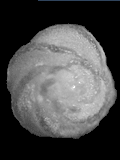
This study examines the texture and reworked planktonic Foraminifera present in dredged and non-dredged sediments from the Guadalquivir Estuary (SW Spain). Dredging significantly changes the grain size of natural silty-clay sediments to fine silty sands in dredged areas. The density and diversity of planktonic Foraminifera, which originate from Cretaceous and Neogene formations, as well as tidal cycles, decrease slightly with dredging. Possible applications of similar studies in Geology and environmental analysis are included.
Downloads
Published
2026-05-31
Issue
Section
Articles
License
Copyright (c) 2026 Carnets Geol.

This work is licensed under a Creative Commons Attribution-NonCommercial-ShareAlike 4.0 International License.
How to Cite
From source rocks to fluvial sediments: Ecological and environmental significance of planktonic Foraminifera in the Guadalquivir River-Estuary (SW Spain). (2026). Carnets Geol., 26, 227-238. https://doi.org/10.2110/carnets.2026.2611