A sea of pufferfishes
New tetraodontid fossils from the Italian Pliocene shed light on an ongoing Mediterranean bioinvasion
DOI:
https://doi.org/10.2110/carnets.2026.2615Keywords:
Climate change, conservation palaeobiology, Lessepsian invasion, Piacenzian, Tetraodontidae, Tuscany, ZancleanAbstract
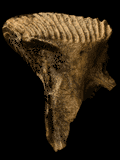
We report on new finds of pufferfish (Tetraodontiformes: Tetraodontidae) beak-like jaws from well-constrained stratal packages at seven Pliocene localities in Tuscany (central Italy). Although these specimens cannot be identified confidently below the family level, their broad distribution and abundance suggest that pufferfishes were established components of the Mediterranean ecosystems under the warm-water conditions that characterised most of the Pliocene Epoch. As some Pliocene intervals are regarded as robust analogues for near-future climate scenarios, our Tuscan fossils provide a deep-time perspective supporting the idea that continued warming may once again promote the invasion and expansion of tetraodontids and other thermophilic vertebrates in the region - a process already underway as the ongoing 'tropicalization' and 'Lessepsian invasion' drive a dramatic surge in Mediterranean pufferfish diversity and abundance.
Downloads
Published
Issue
Section
License
Copyright (c) 2026 Carnets Geol.

This work is licensed under a Creative Commons Attribution-NonCommercial-ShareAlike 4.0 International License.